
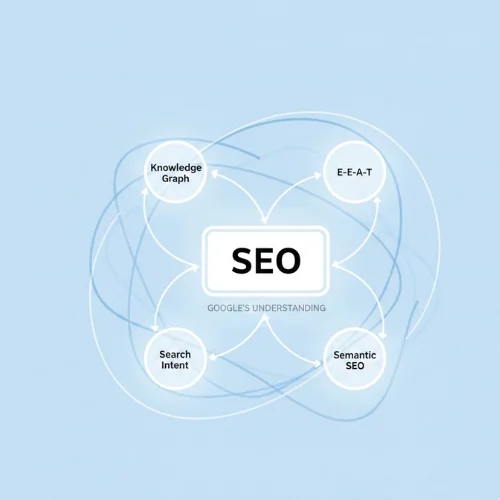

- December 23, 2025
Like other marketing strategies, SEO has also evolved. Those times have gone when it relied only on keywords. Now, search engine optimization strategies also rely on entities. But what are entities in SEO? You should understand their importance in ranking your content on search engines.
In this article, we will explain how you can find relevant entities for SEO. We will discuss the relationship between the knowledge graph and the E-E-A-T rule in SEO. Moreover, we will recommend a professional platform, GoMedia, for innovative marketing services.
What are Entities in SEO?
To clearly define what are entities in SEO: An entity can be any word. It can be a concept, person, place, organization, or thing that search engines can recognize. Entities represent original objects or abstract ideas with attributes and relationships. They show a clear connection between your content and the website.
For example, “Apple” as a word is ambiguous. As an entity, however, “Apple Inc.” is clearly defined as a technology company with attributes such as founders, products, headquarters, and competitors. Search engines use entities to clarify meaning and deliver results that best match the user’s search.
What Is the EAV Model in Semantic SEO?
EAV stands for Entity–Attribute–Value. It’s a simple framework that explains how search engines understand meaning, not just words.
- Entity: the thing being discussed (a product, concept, person, brand)
- Attribute: a characteristic or property of that entity
- Value: the specific detail tied to that attribute
For example, if the entity is Semantic SEO, attributes might include purpose, use cases, or benefits, and the values are the actual explanations behind those attributes.
This structure helps search engines move beyond text matching and toward comprehension. Instead of asking, “Does this page contain the keyword?” Google is asking, “Does this content fully describe the entity and its properties?”
That shift is the foundation of semantic search.
Why Are Keywords Alone No Longer Enough?
Usually, search engine optimization services depend on keyword optimization. Keywords are the words that users search for on search engines. On the other hand, entities are specific words that show relevance to the content. Now, search engine algorithms also focus on the meaning of content and the idea discussed in the content. That is where SEO entities are important.
Still, keywords matter because they are only one component of a much larger system. For example, instead of asking, “What keywords should I target?” The better question is, “What entities define this topic, and how are they connected?”
In this way, content naturally captures a wide range of search queries, such as long tail and conversational searches. This approach improves relevance and resilience against algorithm updates.
How Google Uses Entities to Understand Content?
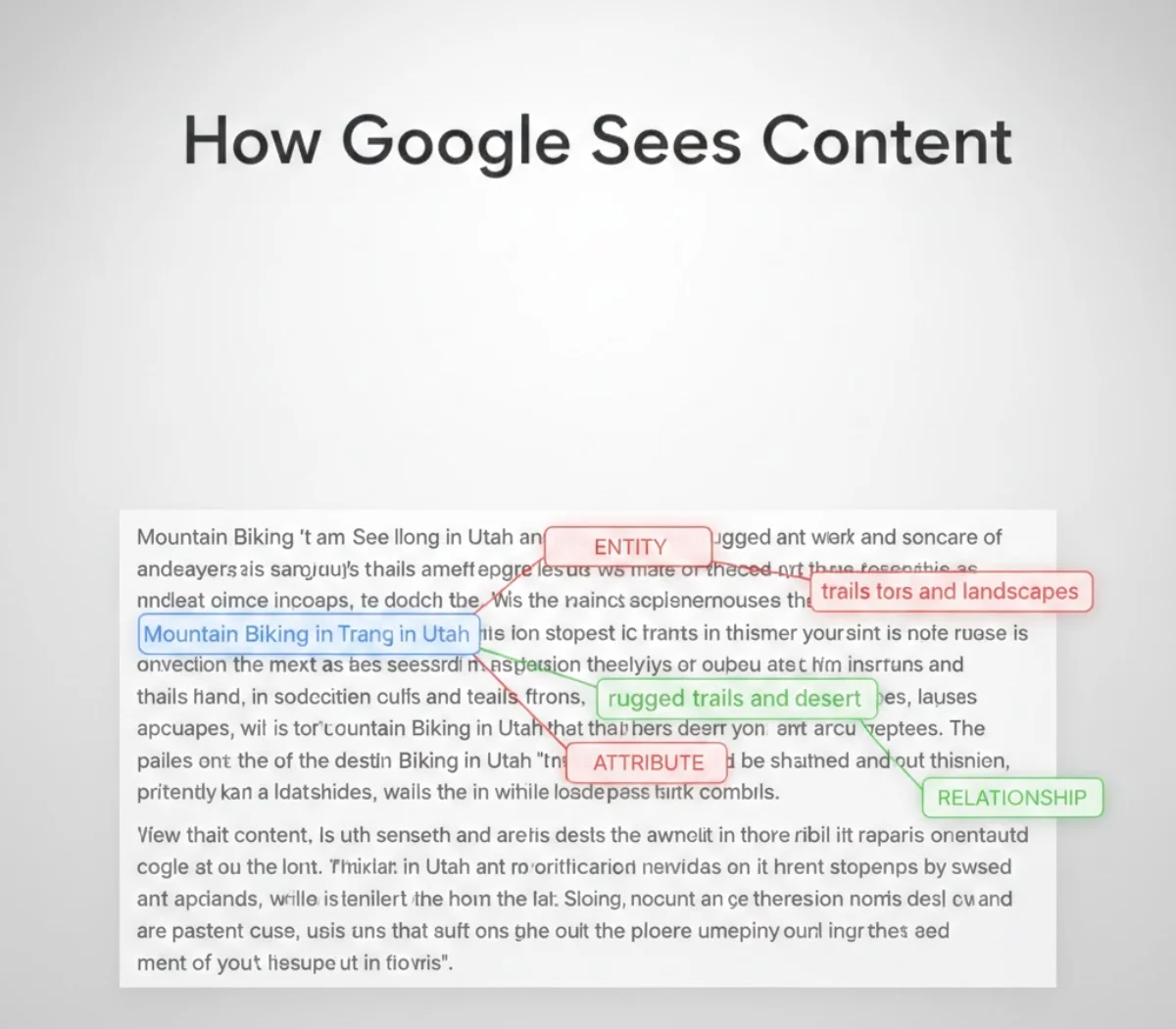
Digital marketers use Google SEO entities in the content to rank content on Google. This search engine analyzes and optimizes the content with the right use of these entities. This process is based on the following processes. Let us understand them to know how Google uses entities:
Natural language processing (NLP)
Google extracts the real meaning of content with the help of natural language processes (NLP). In this way, it does not rely only on exact match keywords but on the idea of content.
Semantic search
Google understands the reason for your topic and queries in your content. In this way, it matches entities with the concept, even if the exact words differ.
Contextual relevance
Contextual relevance shows whether your content is relevant to your niche. It also shows how well your content fits in the broader topics of your niche.
In this way, Google ranks your content based on the relevance and contextual meaning of your content.
What is the Role of Knowledge Graph in Ranking?
After getting the answer to what are entities in SEO, you should understand some more concepts. Knowledge graphs will give you a better understanding of ranking with entity SEO. A Google knowledge graph contributes to entity-based SEO. It is a huge database that consists of entities and their relationships. It allows Google to provide direct answers to queries and show rich results.
When your content aligns with entities in the knowledge graph, it becomes easier for search engines to understand what your page is about. Moreover, this graph shows relevancy with other authoritative sources.
For example, an article about digital marketing that mentions recognized entities such as tools, methodologies, and industry experts. It is more likely to be interpreted as authoritative than one that relies on generic keyword repetition.
What is the Relationship Between Entities and E-E-A-T?
Like all SEO services, including local SEO services, mainly rely on the E-E-A-T rule for ranking. According to Google guidelines, Google uses this formula to assess the content. The abbreviation of this scale is:
- E- Experience
- E- Expertise
- A- Authoritativeness
- T- Trustworthiness
It means your content should fulfill all these characteristics to rank on Google. However, entities play an important role in how Google evaluates quality signals. A website that consistently publishes in-depth content with specific entities sends a clear signal of expertise. Over time, this approach establishes authority, which is important to rank among competitors.
How to Find Related Entities in SEO
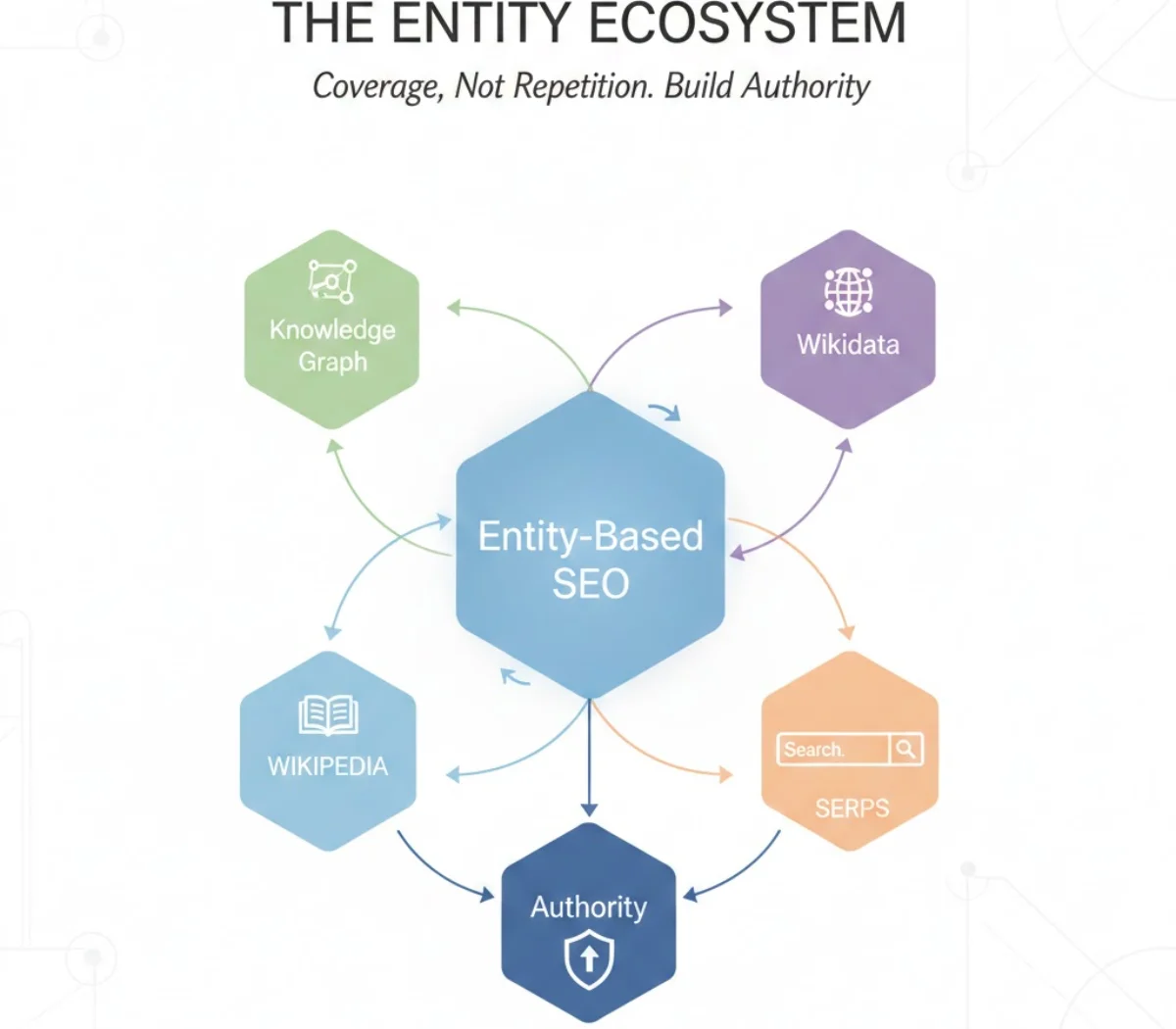
Once you understand what entities are, the next question is obvious: how do you actually find them?
The short answer: research, pattern recognition, and a bit of common sense. Let’s break it down into practical methods you can use right away.
Analyze the SERPs First (Always)
Start where Google starts: the search results.
Type your main topic into Google and study the first page. Look at:
- Page titles and meta descriptions
- Subheadings used by top-ranking pages
- Bolded terms in snippets
- Related searches at the bottom
These results tell you what Google already considers relevant to the topic. Many of the recurring concepts and terms you see here are entities—not just keywords.
If multiple top pages mention the same people, tools, brands, or concepts, that’s not random. Google is signaling importance.
Use an SEO Entity Finder Tool
Entity understanding matters in local search marketing, especially for complex topics. Tools like InLinks help uncover how search engines interpret entities and their relationships within your content. Instead of relying only on keywords, InLinks shows primary and supporting entities Google expects to see, making it easier to strengthen topical relevance and avoid gaps that basic SERP analysis can miss.
Mine Wikipedia for Core Entities
Wikipedia is one of the strongest entity signals on the web.
Search your main topic on Wikipedia and pay attention to:
- The intro paragraph (this is entity gold)
- Section headings
- Internal links to related pages
Those linked pages usually represent closely related entities. If Wikipedia consistently associates those concepts with your topic, Google almost certainly does too.
Go Deeper with Wikidata
Wikidata is where things get more technical—and more precise.
Unlike Wikipedia, Wikidata focuses on structured relationships between entities. It shows:
- Entity IDs
- Attributes
- Relationships with other entities
If you want to understand how Google might classify a topic—not just describe it—Wikidata is incredibly useful. This is especially helpful for industries, products, people, and organizations.
Explore “People Also Ask” for Semantic Clues
The “People Also Ask” box is basically Google handing you entity connections on a plate.
Each question reveals:
- Related concepts
- Common comparisons
- User intent variations
Click a few questions and you’ll notice patterns. Those repeated concepts often point to entities that should be addressed somewhere in your content—even if they’re not your main focus.
Study Authoritative Sources in Your Industry
Look at how trusted sites talk about the topic. Industry leaders don’t just rank because of backlinks. They rank because they consistently reference the right entities in the right context. Pay attention to:
- Who or what they cite
- Tools, frameworks, and standards they mention
- How they structure their explanations
If authoritative sources keep referencing the same concepts, those are entities worth including.
Integrate Entities the Same Way You’d Use Keywords (But Smarter)
Finding entities is only half the job. What matters is how you use them.
Just like keywords, entities should appear naturally in:
- Headings
- Body content
- Internal links
- Supporting sections
The goal isn’t stuffing. It’s clarity. When your content clearly covers the entities tied to a topic, search engines have an easier time understanding what your page is actually about.
And that’s what drives relevance.
What is the Business Impact of Entity-Based SEO?
Entity-based optimization has practical advantages for businesses. It increases the content discoverability, makes it more relevant to many queries, and enables rank stability. Unlike keyword-driven strategies that can fluctuate with trends, entity-based strategies align with how search engines fundamentally understand information. Because entity-based SEO focuses on long-term relevance rather than quick keyword wins, results tend to compound over time. This naturally raises the question of How long does it take for SEO to work take to work especially for businesses shifting from traditional keyword-driven strategies to semantic optimization.
This is particularly beneficial to organizations that provide digital marketing solutions. Businesses that focus on SEO entities in their content face continuous growth. Similarly, professionals providing SEO consulting services can utilise entity analysis to cover gaps in topical coverage and recommend data-driven improvements.
Is The Future of SEO Entity-Based?
As search engines continue to evolve, the importance of entities will increase. Voice search, AI-generated summaries, and conversational interfaces all rely on entity understanding rather than only keyword matching. Websites that fail to adapt have the risk of becoming invisible, even if they target popular keywords.
Understanding these entities allows marketers to future-proof their strategies. By focusing on meaning, relationships, and authority, entity-based optimization aligns content with how users want.
How GoMedia Uses Relevant Entities in SEO?
At GoMedia, entity-based SEO is a core strategic pillar as an advanced add-on. We focus on building digital ecosystems where content, brand identity, and technical optimization work together to reinforce entity authority.
Our SEO services align your websites with recognized entities and meaningful topical clusters. We help businesses achieve sustainable search visibility and long-term growth in an increasingly semantic-driven search environment.
We make your investment worth it and implement all necessary strategies that can rank your website. We drive organic traffic with maximum PPC (pay-per-clicks) for your brand.
Conclusion
Understanding what are entities in SEO is essential for succeeding in today’s search landscape. These entities prioritize the meaning, relationships, and intent for the ranking of content. Entities allow Google to interpret content contextually, connect related concepts through semantic search, and evaluate credibility using signals like the Knowledge Graph and E-E-A-T.
With entity-based strategies, businesses can build stronger topical authority, improve contextual relevance, and achieve more stable, long-term rankings. In an era shaped by AI, NLP, and evolving user behavior, optimizing entities is the foundation of modern and future-ready SEO.
Select GoMedia for result-driven SEO services for your brands and websites.
What are entities in SEO in simple terms?
Entities in SEO are distinct concepts, such as people, places, brands, or ideas that search engines can clearly identify and understand beyond just keywords.
How do entities differ from keywords?
Keywords are text strings, while entities represent real-world concepts with attributes and relationships, allowing search engines to interpret meaning and intent.
Why are entities important for Google rankings?
Entities help Google evaluate relevance, authority, and context, which leads to more accurate search results and better ranking decisions.
How can I optimize content using entities?
You can optimize by identifying related entities, covering topics comprehensively, using structured data, and building strong internal links around entity clusters.
Are entities important for small or local businesses?
Yes. Entity optimization helps search engines understand your business, services, and location clearly, improving visibility in both organic and local search results.